
What Is Ethical Jewellery? Materials, Makers and Sustainability Explained
Integrity — Looking beyond a single label
Integrity — Looking beyond a single label
Ethical jewellery is not defined by one material, one certification or one attractive claim. It asks a wider set of questions: where the materials came from, who worked on them, what conditions shaped the making process, how much of the supply chain can be traced and whether the language used to sell the piece can be supported.
This means that a natural material is not automatically ethical, a handmade piece is not automatically responsibly produced and a recycled component does not answer every question about labour, finishing or transport.
A more useful approach is to look beyond the label and examine the evidence attached to the product. This guide explains what ethical jewellery can mean, how it differs from sustainable and eco-friendly jewellery, and what to check before choosing a piece.
What Does Ethical Jewellery Actually Mean?
Ethical jewellery is a broad term for jewellery made and sold with consideration for people, sourcing, working conditions, environmental impact and honest communication.
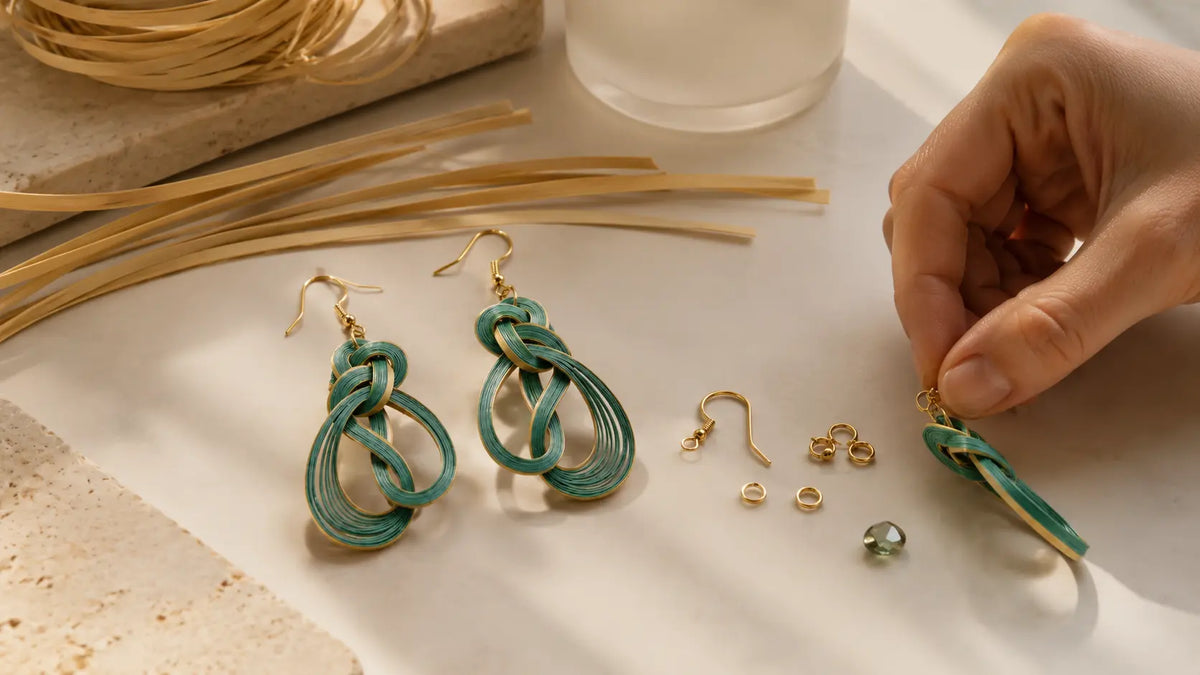
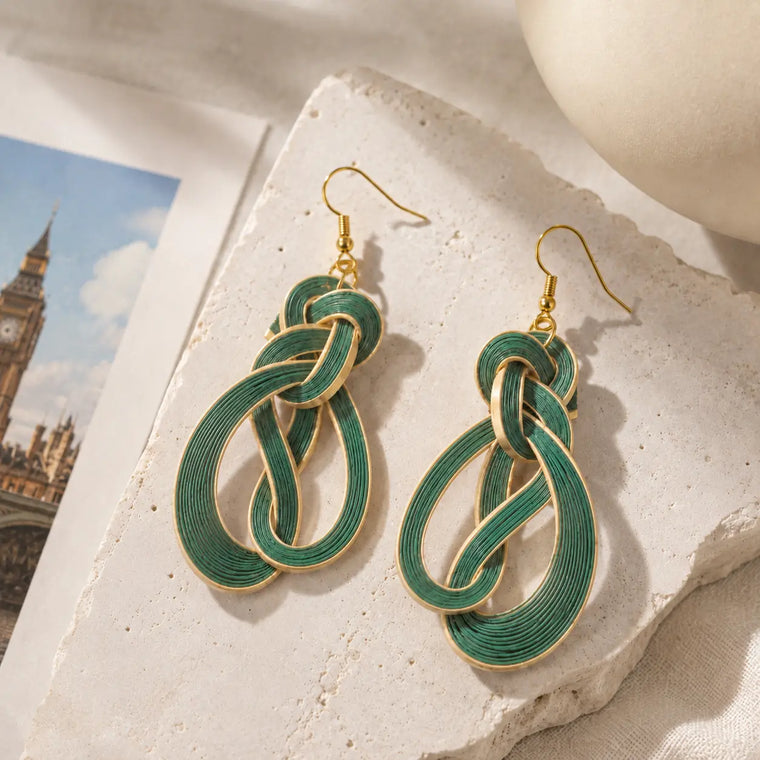
The word “ethical” does not describe a particular visual style. A minimal silver ring, a gemstone necklace and a pair of handwoven bamboo earrings can all raise different ethical questions.
The most useful definition focuses on four areas.
People. Who mined, harvested, processed, assembled and finished the materials? Were their rights, safety and working conditions considered?
Materials. Can the origin and composition of the main material, fittings, coatings and decorative elements be explained?
Process. What forms of extraction, chemical treatment, energy use, finishing, packaging and transport were involved?
Claims. Is the brand making precise statements that can be supported, or relying on broad words such as “green”, “conscious” and “planet-friendly” without explaining their scope?
No jewellery business can reduce a complex supply chain to a single perfect adjective. Ethical practice is better understood as a process of knowing more, disclosing more and improving specific decisions rather than presenting a product as free from all impact.
Ethical, Sustainable and Eco-Friendly Jewellery Are Not the Same
The terms are related, but they do not mean exactly the same thing.
Ethical Jewellery
Ethical jewellery places particular emphasis on people and business conduct. It may consider human rights, labour conditions, fair treatment, responsible sourcing, community effects, corruption risks and transparency across the supply chain.
Environmental issues still matter, but they sit alongside social and commercial responsibilities.
Sustainable Jewellery
Sustainable jewellery usually focuses on whether materials and business practices can be maintained without creating unacceptable long-term environmental or social harm.
This may include resource use, emissions, waste, durability, repair, sourcing and the life of the finished product. A meaningful sustainability statement should identify which of these areas it addresses rather than treating “sustainable” as a complete description.
Eco-Friendly Jewellery
Eco-friendly jewellery is normally an environmental claim. It suggests that a product, material or process has an environmental advantage or causes less harm than an alternative.
For UK shoppers, such claims should be specific and supported. The UK Green Claims Code guidance for fashion businesses emphasises that environmental claims should be clear, accurate, substantiated and not hide information that customers need in order to understand them.
A phrase such as “made with recycled silver” is more precise than simply calling an entire piece “eco-friendly”. It tells the customer which material is being described and leaves room to explain the remaining components.
The Material Is Only One Part of the Story
Material choice matters, but it cannot answer every ethical question on its own.
Precious Metals and Gemstones
Gold, silver, platinum, diamonds and coloured stones may involve mining, refining, chemical processing and long international supply chains.
Relevant questions include the origin of the material, labour and safety conditions, environmental controls, traceability and whether the supplier uses recognised due-diligence or certification systems.
A finished piece may contain several separate materials, each with a different supply chain. A responsibly sourced stone does not automatically explain the origin of the metal, and a recycled metal claim does not automatically explain the setting, coating or workshop conditions.
Natural Materials
Bamboo, wood, shell, plant fibres and other natural materials can offer texture, lightness and an alternative to a fully metal form. They still require careful questions.
Where was the material grown or collected? How was it prepared? Were dyes, adhesives, preservatives or coatings added? What are the hooks, posts and connecting parts made from? How should the finished piece be cared for?
Natural does not mean impact-free. It describes the origin or character of a material, not the complete ethics of a product.
This distinction is especially important with bamboo. The word can describe a genuine natural material, a regenerated textile fibre or simply a metal design inspired by bamboo cane. Read Real Bamboo Earrings vs Bamboo-Style Hoops for a closer look at those differences.
Recycled Materials
Recycled metals and recovered components may reduce demand for newly extracted material, but the word “recycled” still needs context.
Customers should be able to understand which part is recycled, how the content is verified and whether the claim applies to the entire piece or only one component.
Recycled content also does not replace questions about current working conditions, chemical processing, product quality or the remaining materials.
The Maker Matters as Much as the Material
Jewellery is shaped by people at every stage, even when the finished product appears simple.
Mining, harvesting, cutting, polishing, weaving, plating, stone setting, assembly, quality control and packaging may take place in different workshops and countries.
An ethical approach should consider whether workers are treated with dignity, whether workplaces are safe, whether hours and expectations are reasonable and whether businesses have a way to identify and address harm.
For artisan-made jewellery, the maker should not be reduced to a romantic image of anonymous handcraft. Useful information explains where the work takes place, what the artisan actually does and why the process requires skill.
The making of handwoven bamboo jewellery, for example, involves material preparation, strip refinement, controlled weaving, shaping, edge finishing and the addition of fittings. You can see this sequence in How Handwoven Bamboo Earrings Are Made.
Traceability and Due Diligence
Traceability concerns the ability to follow a material or product through its supply chain. Due diligence concerns the steps a business takes to identify, assess, prevent and respond to risks connected with that chain.
In jewellery, complete traceability can be difficult because a small object may combine metal, plating, stones, adhesives, natural materials and packaging from several suppliers.
That complexity is not a reason to make vague claims. It is a reason to state clearly what is known, what has been verified and where information remains limited.
A small independent brand may not control a mine, refinery or every upstream process. It can still disclose direct suppliers, identify materials accurately, request supporting documents, separate verified facts from assumptions and avoid claims that extend beyond the available evidence.
Transparency does not require pretending that every answer is complete. Honest limits are more useful than confident language that cannot be checked.
What Certifications Can and Cannot Tell You
Certification can provide a structured way to assess certain practices, but every scheme has a defined scope.
Responsible Jewellery Council
The Responsible Jewellery Council Code of Practices addresses responsible business conduct across areas including human rights, labour, environmental practices, due diligence and legal compliance within the jewellery supply chain.
When a company refers to RJC membership or certification, customers should still check what entity has been certified and what materials or activities fall within that scope.
Fairtrade Gold
Fairtrade Gold applies a defined standard to participating artisanal and small-scale mines. Its requirements address areas including working conditions, health and safety, chemical handling, child labour, women’s rights and environmental protection, with compliance checked through auditing.
A Fairtrade Gold claim is specific to eligible gold sourced through that system. It does not automatically describe stones, non-gold components, packaging or every practice of the finished jewellery brand.
Certification Has Boundaries
A certification can be valuable evidence, but it should not be stretched beyond what it actually verifies.
Look for the name of the scheme, the certified organisation or material, the relevant standard and a way to confirm the claim. A logo without context is less useful than a clear explanation of its scope.
How to Recognise Vague Ethical or Environmental Claims
Ethical language becomes difficult to trust when it sounds comprehensive but reveals very little.
Large Claims Without a Defined Scope
Words such as “ethical”, “sustainable”, “responsible” and “eco-friendly” should be followed by detail.
Does the claim refer to one material, the workshop, the packaging, a certification or the entire business? Without that scope, customers cannot tell what has actually been assessed.
One Positive Feature Used to Describe the Whole Product
A natural bamboo body does not explain the metal findings. Recycled silver does not explain a gemstone. Plastic-free packaging does not explain material sourcing.
A good product description separates the components and avoids using one favourable feature to imply that the entire piece has been independently verified.
Claims Without Evidence
Statements such as “zero impact”, “fully sustainable”, “planet-safe” or “completely biodegradable” require unusually strong evidence.
Jewellery often includes mixed materials, finishes and fittings, so absolute claims are rarely explained by the visible material alone.
Missing Information About Care and Longevity
Ethical communication should continue after the sale.
Clear care guidance helps customers understand moisture, abrasion, storage, repairs and the limits of the material. It also prevents a product from being presented as more durable or maintenance-free than it really is.
What Should an Ethical Jewellery Brand Disclose?
When comparing ethical jewellery brands, look for specific information rather than the number of values-based words on the page.
What Is the Piece Made From?
The main body, hooks, posts, backs, chains, settings, plating, stones, adhesives and decorative elements should be identified as clearly as possible.
Material names should describe what is physically present. “Bamboo-inspired”, for example, is different from “made from real bamboo”.
Who Made It and Where?
A useful answer identifies the country, workshop, artisan group or production partner and explains the work carried out there.
The aim is not to turn the maker into a decorative story. It is to make the relationship between labour, skill and finished object more visible.
How Was It Made and Finished?
The brand should explain relevant processes such as weaving, casting, plating, polishing, dyeing, setting, coating or assembly.
For bamboo craft, even a simple introduction to how bamboo weaving creates structure helps customers understand that the pattern is part of the construction rather than a printed surface.
Which Claims Are Verified?
If a brand mentions recycled content, certified material, responsible sourcing or a reduced environmental impact, it should explain the evidence and the part of the product to which the statement applies.
Where evidence is incomplete, a factual material description is better than an unsupported ethical conclusion.
How Should the Piece Be Used and Cared For?
Dimensions, weight, fittings, care and repair information help a customer make a more informed decision.
These details may appear less dramatic than a sustainability slogan, but they are central to honest product education and long-term use.
Does Handmade Mean Ethical?
No. Handmade describes how some or all of a piece was made. It does not automatically describe pay, working conditions, material sourcing or environmental impact.
Handwork can represent skill, time and a close relationship with material. It becomes more meaningful when the brand explains the process and the people behind it.
A handmade claim should therefore answer practical questions. Which stages were completed by hand? Who performed them? Where did the work take place? What other processes or factory-made components were involved?
This distinction protects both the customer and the maker. It prevents craftsmanship from becoming an empty marketing phrase and allows genuine skill to be understood more accurately.
Are Natural Materials Always Ethical?
No. Natural materials can still be overharvested, poorly traced, chemically treated or combined with components whose origins are unknown.
The visible material may also represent only part of the finished piece. An earring made with bamboo may include metal hooks, stones, thread, coatings or adhesive.
The correct question is not simply whether the material is natural. It is whether its source, preparation, additional components and claims are explained with enough clarity to make an informed choice.
For Bamboura, the value of bamboo is best described through what can be seen and documented: real material, visible fibre, handwoven structure, lightness, dimensions, fittings and care.
How Bamboura Approaches the Question
Bamboura’s most useful contribution to ethical jewellery is not a broad promise of perfection. It is material and process transparency.
The main bamboo forms are described as real bamboo rather than metal designed to resemble bamboo. The craft can be explained through preparation, weaving, shaping and finishing. Product pages can identify dimensions, weight, stones and metal fittings, while care guidance explains how natural material should be worn and stored.
This evidence-led approach reflects Bamboura’s relationship between bamboo heritage and contemporary British design. The material is not used as a shortcut to an environmental claim. It is treated as a visible part of the object’s structure and identity.
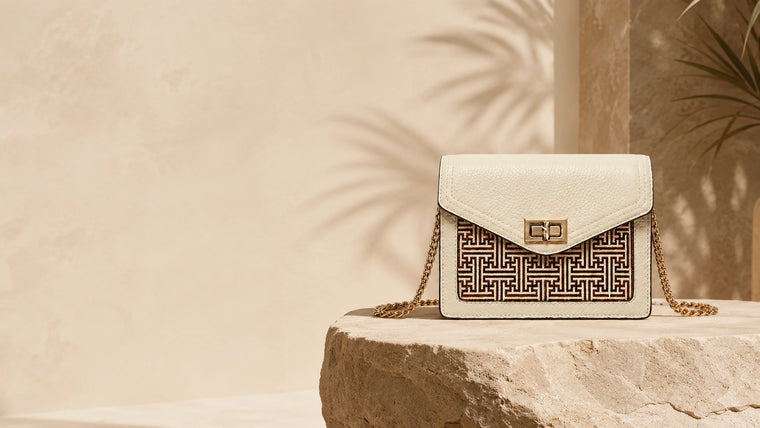
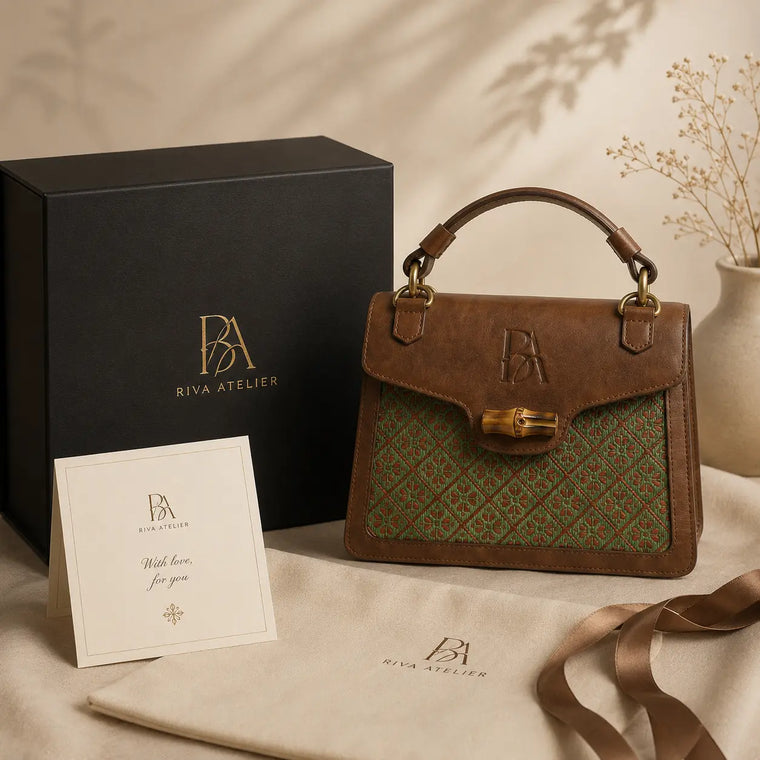
Customers can explore the handwoven bamboo earrings collection to compare forms, materials and product details, or view the bamboo handbag collection to see how the same craft language works at a different scale.
As with any brand, the strongest ethical statements are the ones tied to evidence that can be explained, updated and checked.
A Practical Way to Shop for Ethical Jewellery
Begin with the product rather than the label.
Read the material description closely. Separate the main material from the fittings and finishes. Look for information about the maker and location. Check whether certifications apply to a specific material or to the business. Review dimensions, care and return information. Ask the brand when an important detail is missing.
Price alone cannot confirm whether jewellery is ethical. A higher price may reflect skilled labour, small-scale production, precious material or branding, but it is not evidence by itself. A lower price also does not automatically prove poor practice.
The useful question is whether the information provided gives a credible account of the materials, people and processes behind the piece.
Ethical jewellery is not about finding an object with no impact. It is about making decisions with clearer information and expecting brands to describe both their progress and their limits honestly.
Frequently Asked Questions
What Makes Jewellery Ethical?
Ethical jewellery considers the treatment of people, the origin and processing of materials, working conditions, supply-chain risks, environmental effects and the accuracy of brand claims.
Is Ethical Jewellery the Same as Sustainable Jewellery?
No. The terms overlap, but ethical jewellery often places stronger emphasis on people, rights and responsible business conduct, while sustainable jewellery may focus more broadly on long-term social and environmental impact.
Is Handmade Jewellery Always Ethical?
No. Handmade describes a production method. Ethical practice also requires information about working conditions, sourcing, pay, materials and business conduct.
Are Natural Materials More Ethical Than Metal?
Not automatically. Natural materials and metals have different supply chains and impacts. Each should be assessed according to origin, processing, additional components, working conditions and evidence.
Does Recycled Metal Make Jewellery Ethical?
Recycled metal can be a positive material choice, but it does not answer every question about labour, refining, current production, stones, coatings or other components.
What Certification Should Ethical Jewellery Have?
There is no single certification that covers every material and every ethical issue. Check what a certification assesses, which organisation or material is certified and whether the claim applies to the finished piece.
How Can a Small Jewellery Brand Demonstrate Ethical Practice?
A small brand can identify materials accurately, disclose direct production partners, explain making processes, request supplier evidence, use precise claims and state clearly where information is still limited.
Ethics Begins with Specific Information
The phrase ethical jewellery is useful only when it leads to clearer questions.
Who made the piece? What is it made from? How were the materials processed? Which parts can be traced? What has been independently verified? What remains unknown?
A responsible brand does not need to present itself as perfect. It needs to communicate with enough precision for customers to understand what they are choosing.
For Bamboura, that means allowing real bamboo, visible craftsmanship and considered design to be described through evidence rather than broad environmental language.
Explore the Bamboura collections to discover handwoven bamboo earrings and handbags shaped through natural material, traditional skill and contemporary form.
Bamboura
A modern bamboo atelier reimagining bamboo craft through contemporary design.
Email: service@bamboura.co.uk
Phone: +44 7962883533 (Mon-Fri 10:00-15:00 GMT)
BAMBOURA LTD