
The Beauty of Herringbone Bamboo Weaving
Rhythm — The Heritage Pattern in Bamboo Craft

Herringbone is a pattern many people already recognise, even if they do not know its name. It appears in tailoring, flooring, interiors and heritage textiles, where angled lines create a sense of rhythm and quiet movement.
In bamboo weaving, a similar visual language appears through what is traditionally known in Chinese bamboo craft as renzi bian, or “人字编”. The pattern is formed through repeated angled crossings, creating a surface that feels structured, directional and naturally elegant.
For Bamboura, this kind of pattern matters because it helps connect traditional bamboo craft with modern accessories. It shows how bamboo can carry both heritage and refinement without feeling heavy or overly decorative.
What Is Herringbone Bamboo Weaving?
Herringbone bamboo weaving is a directional weave pattern created by arranging bamboo strips into repeated angled lines. These lines often meet or alternate in a way that resembles the familiar herringbone structure seen in textiles and interiors.
Unlike a simple straight cross-weave, herringbone has more visual movement. The eye follows the diagonal rhythm across the surface, making the woven piece feel more dynamic.
This is why the pattern can feel both traditional and contemporary. It has the order of craft, but also the softness of natural movement.
Why the Pattern Feels Familiar to British Consumers
Herringbone is already part of British visual culture. It appears in wool coats, tweed jackets, parquet flooring and classic interior details.
Because of this, herringbone bamboo weaving can feel familiar even when the material is unexpected. The pattern gives bamboo a bridge into a language of tailoring, heritage and quiet elegance.
For a British audience, this makes bamboo craft easier to understand. It is not only an unfamiliar traditional technique; it also shares a visual rhythm with patterns they already associate with quality and refinement.
How Directional Weaving Creates Texture
The beauty of herringbone bamboo weaving comes from direction. Instead of a flat, static surface, the angled lines guide the eye across the material.
When light falls on the bamboo strips, each angle catches the surface slightly differently. This creates subtle contrast, shadow and depth.
For accessories, this matters. A small woven piece can feel visually rich without needing heavy decoration, bright colour or oversized form.
Why Herringbone Works Well in Natural Accessories
Natural accessories often need balance. They should feel organic, but not rough. They should feel crafted, but still refined enough for modern styling.
Herringbone bamboo weaving helps create that balance. Its structure brings order, while the bamboo material keeps the surface warm, light and natural.
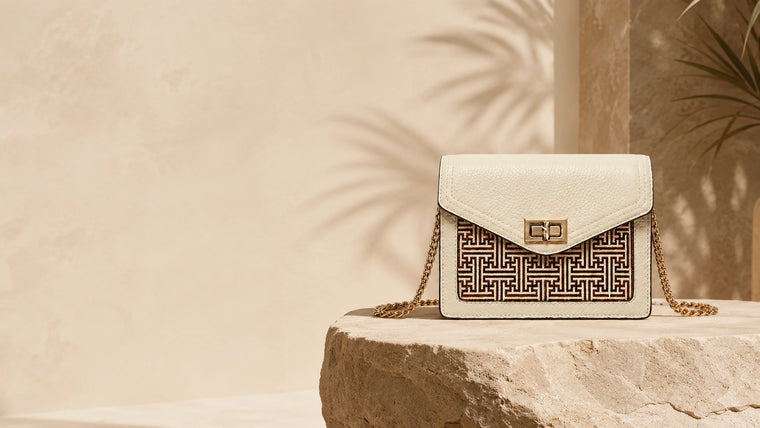
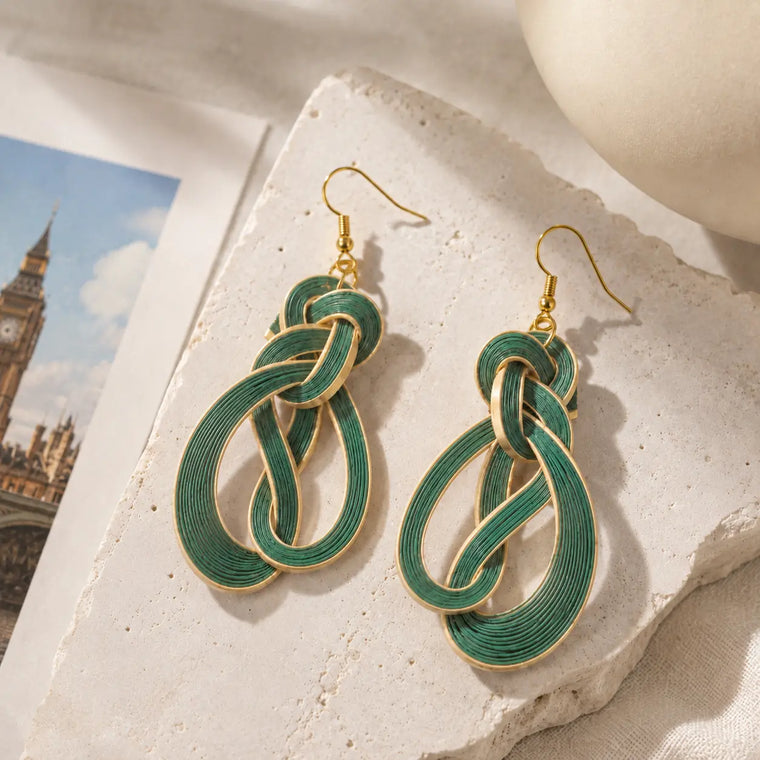
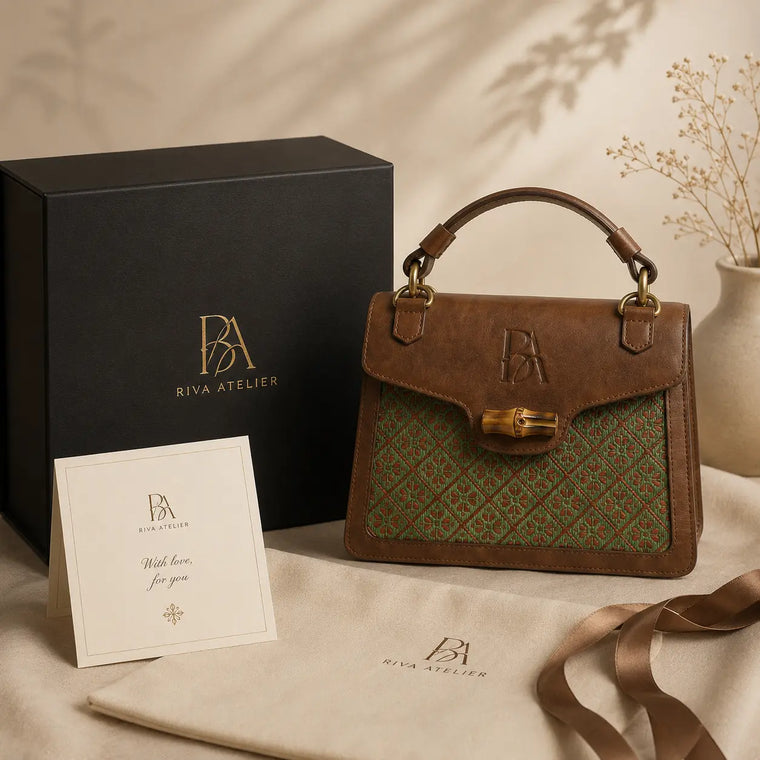
This makes the pattern especially suitable for pieces that need quiet character. In earrings or handbags, herringbone-inspired weaving can add texture without making the design feel loud.
Explore more natural woven forms in the Bamboura Earrings collection and Bamboura Handbags collection.
From Traditional Pattern to Modern Styling
Traditional bamboo weaving was often used for practical objects, but its patterns were never only functional. They also carried visual rhythm, regional craft knowledge and the hand of the maker.
In a modern accessory, the same logic can become more minimal. The pattern does not need to dominate the piece. It can simply add a quiet layer of texture.
This is where bamboo weaving becomes relevant for contemporary wardrobes. It can sit naturally beside linen, soft tailoring, knitwear or simple dresses, adding a crafted detail that feels considered rather than decorative.
How Bamboura Interprets Bamboo Pattern
At Bamboura, we see bamboo patterns as a design language. A weave is not just surface detail; it is structure, movement and material identity at the same time.
Herringbone bamboo weaving is especially meaningful because it connects two worlds: traditional craft and modern elegance. It has the familiarity of a heritage pattern, but the lightness and warmth of natural bamboo.
Through handwoven bamboo earrings and future handbag designs, Bamboura continues to explore how these traditional structures can become refined accessories for contemporary life.
The beauty of herringbone bamboo weaving lies in its rhythm. It is structured, but not rigid. Traditional, but not old-fashioned. Decorative, but never excessive.
For Bamboura, this is the kind of craft language that feels most relevant today. By reimagining bamboo weaving through modern accessories, we aim to bring heritage patterns into daily life with lightness, texture and quiet refinement.
Bamboura
A modern bamboo atelier reimagining bamboo craft through contemporary design.
Email: service@bamboura.co.uk
Phone: +44 7962883533 (Mon-Fri 10:00-15:00 GMT)
BAMBOURA LTD